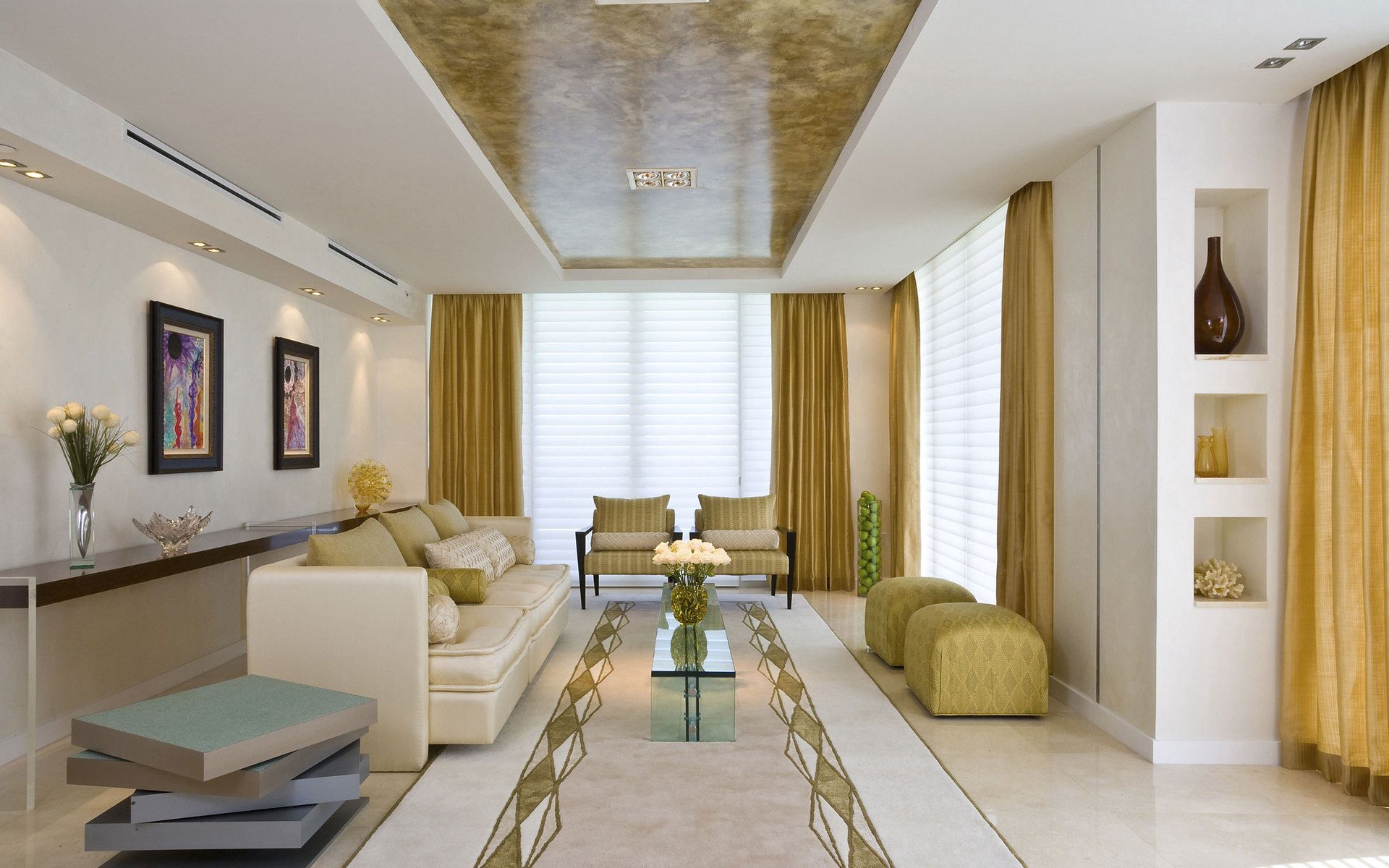
A false ceiling hides wiring, holds your lighting, and changes how a room feels. The three common materials in Indian homes behave very differently, though, especially in damp rooms and when something needs fixing later.
In short: gypsum board suits clean, modern ceilings with concealed lighting. It's quick to install and less messy. POP is best for curves, cornices and decorative detail, but depends on skilled work and takes longer. PVC is the usual choice for bathrooms and balconies because it handles moisture, but it can look plastic and shouldn't be near hot lights.
How they compare
| Gypsum board | POP (Plaster of Paris) | PVC panels | |
|---|---|---|---|
| What it is | Factory-made boards of hydrated calcium sulphate | Gypsum powder mixed with water on site | Plastic panels |
| How it's fitted | Boards cut to size and fixed to a metal frame | Paste applied over mesh and shaped by hand | Interlocking panels fixed to a frame |
| Finish | Flat; joints are finished to hide them | Seamless; can be moulded into any shape | Visible joint lines between panels |
| Installation | Quick, less mess | Slow, messy, needs skilled workers | Quick |
| Moisture | Standard boards aren't waterproof; use moisture-resistant boards in wet areas | Can develop hairline cracks in humid conditions if poorly cured | Handles moisture well |
| Repairs | The whole board is usually replaced | A small section can be cut out and redone | Panels can be replaced |
| Best for | Living rooms and bedrooms with straight lines and cove lighting | Curves, cornices and decorative ceilings | Bathrooms, balconies, utility areas |
Gypsum board
Gypsum boards come in standard thicknesses (9, 12 and 15 mm) and sheet sizes, and are fixed to a metal framework hung from the slab. The frame makes them a good fit for concealed lighting, coves and AC ducts. Because the boards are factory-made, the surface is even and installation is fast, which matters in a society with fixed work hours.
Watch for: standard gypsum is not waterproof. In a kitchen, specify moisture-resistant boards. In a bathroom, consider PVC instead.
POP
POP is mixed on site and shaped by hand, so it can do what boards can't: curves, domes, cornices and intricate patterns, with no joints. The flip side is that the result depends heavily on the workers' skill, the work takes longer, and it creates more dust and mess. HomeLane's guide puts POP at roughly 25% cheaper than gypsum, but quality varies more.
Watch for: cracking from poor mixing or curing, and more dust in an occupied home.
PVC
PVC panels are light, quick to fit and easy to clean, and they tolerate damp, which is why they're common in bathrooms and balconies. They are usually the most economical option.
Watch for: PVC can look less premium, with visible joint lines. It isn't fireproof and can be damaged by heat, so use LED lights rather than hot fittings close to it.
Planning tips for any false ceiling
- Plan the lighting and wiring first. Decide on downlights, cove lighting and fan positions before the ceiling closes. Changing them later means cutting the ceiling.
- Ask how much height you'll lose. A false ceiling lowers the room. Agree on the drop with your designer, especially in rooms with low slabs.
- Leave access panels where wiring junctions, AC units or water pipes sit above the ceiling.
- Match the material to the room: gypsum or POP for living rooms and bedrooms, moisture-resistant boards or PVC for kitchens, bathrooms and balconies.
- Check your society's rules on work hours and dust. Our society permission guide covers what to expect.
- Get the specification in the quote: the board type and thickness, the frame, and how much ceiling area is included. Our quote checklist helps you compare.
Frequently asked questions
Which false ceiling is best for a bedroom?
For a clean, modern look with cove lighting, gypsum board is the common choice. For a decorative ceiling with curves or cornices, POP. Both work well in a dry room.
Can I use gypsum in the kitchen?
Use moisture-resistant gypsum boards rather than standard ones, and keep the ceiling clear of the chimney and hob area.
What's best for a bathroom ceiling?
PVC is the usual choice because it handles moisture. If you want gypsum, use moisture-resistant boards.
Is a false ceiling included in your home interior price?
No. In our 2BHK and 3BHK starting prices, false ceiling, painting and electrical work are priced separately. See the 2BHK cost guide.
Planning a ceiling?
Book a free consultation. Our designer plans the ceiling and lighting together with the rest of your home. See our services.
Sources